WinterAtomics header banner - Computational materials science research

Stephen Kerr

PhD candidate in computational materials science at Queen's University. Studying defect mechanisms in alloys using DFT and molecular dynamics.

PyKMC

Companion page for the PyKMC poster — full simulation showreel up top, then per-event animations and init / saddle / final stills for the four elementary surface events covered on the poster.

Full showreel

End-to-end render of a representative PyKMC trajectory in Ni–Cr–Al: vacancy diffusion, surface ↔ subsurface exchange, and 1NN in-plane hops, sequenced in the order they occurred during the run.

Event 1 — Surface ↔ subsurface exchange (downward)
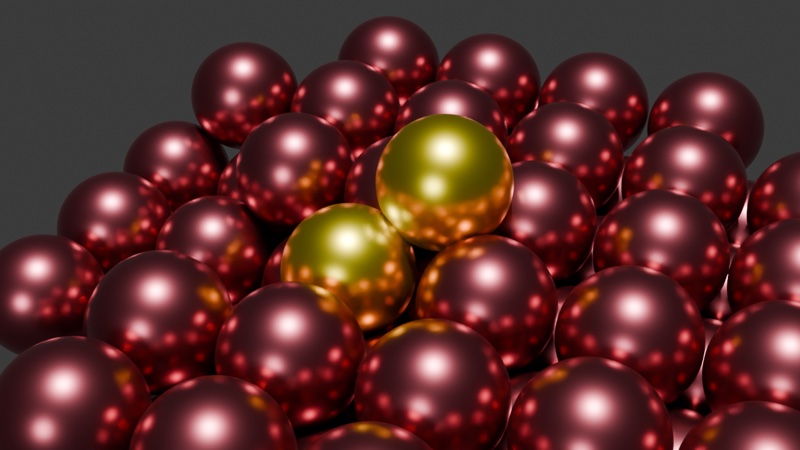
Surface atom hops into a subsurface vacancy. Sets the downstream availability of vacancies for the in-plane events.

An atom on the surface layer swaps with the subsurface vacancy directly below it. This event transports a vacancy upward to the surface while moving a surface atom into the bulk — the first ingredient in the chromium-driven enhancement of bulk vacancy concentration.

Event 1 — initial state
Initial
Event 1 — saddle point
Saddle
Event 1 — final state
Final

Event 2 — Surface 1NN in-plane (atom 3975)
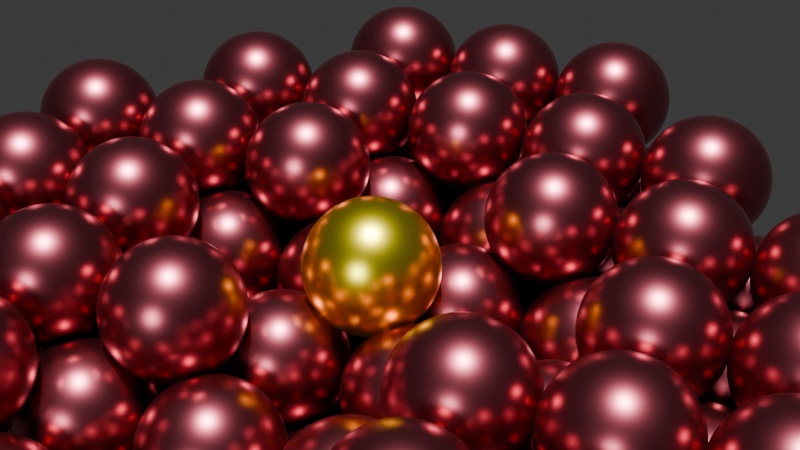
First-nearest-neighbour hop in the surface plane. Atom index 3975 — a particular local environment.

A surface atom hops to a first-nearest-neighbour vacancy site within the same surface plane. The local chromium / aluminium configuration around atom 3975 sets this event's barrier and rate; comparing it with the same geometric event at a different atom (Event 3) shows how strongly the barrier varies with local chemistry.

Event 2 — initial state
Initial
Event 2 — saddle point
Saddle
Event 2 — final state
Final

Event 3 — Surface 1NN in-plane (atom 2023)
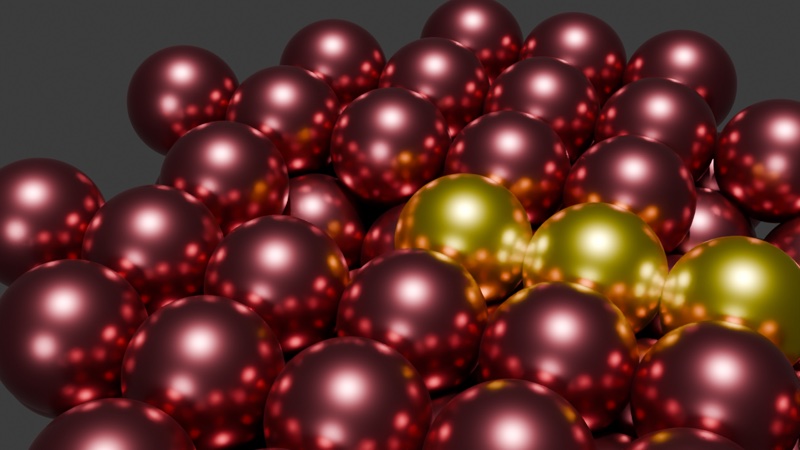
Same geometric event as Event 2, different atom (idx 2023) — different local chemistry, different barrier.

Atom 2023 makes the same geometric move as atom 3975, but its neighbours differ — so the barrier (and the rate that PyKMC samples it at) differs too. Side-by-side with Event 2, this is the cleanest single-event illustration of the local-environment sensitivity that PyKMC has to resolve at every step.

Event 3 — initial state
Initial
Event 3 — saddle point
Saddle
Event 3 — final state
Final

Event 4 — Surface ↔ subsurface exchange (upward, atom 3234)
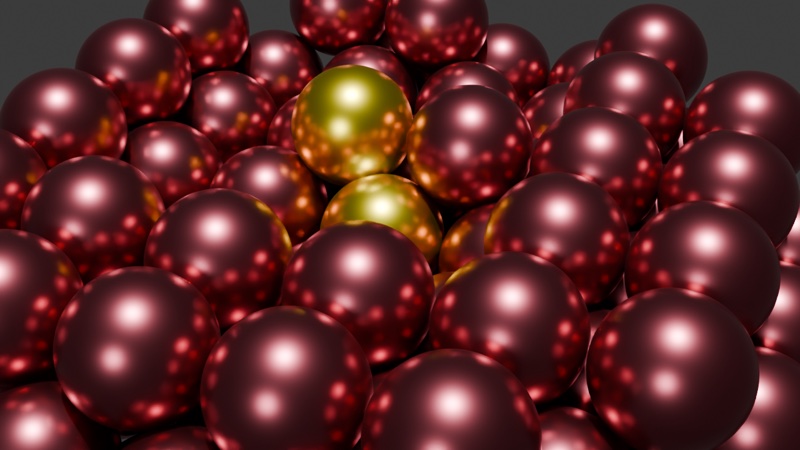
Reverse of Event 1: subsurface atom 3234 hops up to the surface. Closes the surface ↔ bulk vacancy cycle.

The subsurface atom at index 3234 hops up into a surface vacancy, swapping the vacancy back into the bulk. Paired with Event 1, this completes the simplest surface ↔ subsurface exchange cycle and is the elementary step that lets vacancies (and segregating Al) shuttle between the surface and the interior.

Event 4 — initial state
Initial
Event 4 — saddle point
Saddle
Event 4 — final state
Final